Injective Is a DeFi Blockchain Built for On-Chain Finance
Injective Is a blockchain network designed for decentralized finance, especially trading, derivatives, exchanges, lending apps, and other financial markets that run on-chain. Injective uses a fast proof-of-stake architecture, connects with the broader Cosmos ecosystem, and supports smart contracts for developers building crypto applications. For users, Injective matters because it aims to make DeFi faster, more interoperable, and more specialized than general-purpose blockchains.
Injective is often discussed as both a blockchain and an ecosystem. The chain provides the base infrastructure, while wallets, decentralized exchanges, bridges, validators, analytics tools, and applications make up the broader user experience. That distinction is important because someone evaluating Injective is not only evaluating code; they are also evaluating liquidity, security practices, documentation, community support, and the practical quality of apps built on top of the network.
The protocol is part of the wider movement toward open financial software. Instead of depending on a single brokerage, bank, or exchange operator, Injective lets applications settle trades and transactions through blockchain-based rules. That can increase transparency, but it also shifts more responsibility to the user. Anyone exploring Injective should understand wallet custody, transaction approvals, bridge risk, market volatility, and how to verify current details through official ecosystem resources before using real funds.
What is Injective?
Injective is a layer-one blockchain focused on DeFi, meaning it is not simply a token project or a single exchange interface. It is a network where developers can deploy financial applications and where users can interact with markets through crypto wallets. Injective is commonly associated with decentralized spot trading, perpetuals, prediction markets, structured products, automated strategies, and other on-chain finance use cases.
Injective uses infrastructure from the Cosmos world, including interoperability concepts that help independent chains communicate. This matters because DeFi activity rarely stays inside one isolated network. Users may hold assets on Ethereum, stablecoins on different chains, or tokens from app-specific ecosystems. Injective tries to fit into that multi-chain reality by giving builders a finance-oriented base layer with cross-chain connectivity as a core part of the experience.
Injective also has a native asset, commonly referenced by the ticker INJ, which can be used in network economics such as staking, governance, and fees depending on the current design of the protocol and applications. Token mechanics can change through upgrades and governance, so users should verify the latest details before relying on assumptions. A useful starting point is to separate the technology question from the investment question: Injective can be technically interesting even though any crypto asset remains volatile.
How does Injective work?
Injective works by combining a proof-of-stake validator network with application modules and smart contract capabilities. Validators help process transactions and maintain consensus, while developers build apps that use the chain for settlement, trading logic, and account interactions. In simple terms, Injective provides the rails, and DeFi applications provide the user-facing products that run on those rails.
Injective transactions are submitted from wallets, signed by users, and broadcast to the network. Once a transaction is included in a block, the relevant app state updates. That might mean a swap has executed, collateral has moved, a governance vote has been submitted, or a smart contract interaction has completed. Injective is designed to keep this workflow quick enough for finance applications where slow settlement can create a poor trading experience.
Injective also benefits from being built for financial markets from the start. General-purpose chains can support DeFi, but they also serve gaming, collectibles, identity, social apps, and many unrelated workloads. Injective narrows the design target toward exchange infrastructure, market modules, and developer tools for on-chain finance. That specialization does not remove risk, but it helps explain why users researching decentralized trading often encounter Injective alongside terms like order books, derivatives, bridges, staking, and liquidity.
For background reading inside a broader educational site, a reader might pair this page with a basic guide to or a primer on . Those topics make Injective easier to evaluate because many of the same ideas appear across wallets, gas fees, validators, bridges, and smart contracts.
What can people use Injective for?
Injective is most naturally used for DeFi applications where speed, market access, and cross-chain assets matter. A user may connect a compatible wallet, move assets into the ecosystem, and trade through an application that settles activity on Injective. A developer may build a trading interface, liquidity tool, automated strategy, analytics dashboard, or contract-based financial product using Injective as the underlying network.
Injective use cases commonly include decentralized exchange activity, derivatives markets, token swaps, staking, governance participation, and liquidity provision. Some users are interested in Injective because they want access to on-chain markets without creating a traditional exchange account. Others care more about the developer side, where Injective can serve as infrastructure for apps that need crypto-native settlement and composability.
Trading tokens or synthetic market products through decentralized applications.
Staking eligible assets with validators to participate in network security.
Using bridges or interoperability tools to move assets across supported ecosystems.
Participating in governance when proposals are open to token holders.
Building or testing DeFi applications that need fast on-chain execution.
In practice, the exact experience depends on the app. Injective itself is the network layer, while each interface makes decisions about supported markets, wallet options, order types, display design, risk warnings, and help resources. A cautious user evaluates both levels. The chain may be functioning normally, while a specific app could have limited liquidity, confusing permissions, or smart contract risk.
How do you get started with Injective?
Injective usually starts with a wallet. A new user chooses a wallet that supports the ecosystem, secures the recovery phrase, and learns how transaction signing works before moving meaningful value. This first step deserves patience. In crypto, losing a seed phrase, approving a malicious transaction, or sending assets to the wrong network can be difficult or impossible to reverse.
After the wallet is ready, the user can explore an Injective application with small test amounts. The normal workflow is to connect the wallet, review the app permissions, choose an action, inspect the transaction prompt, and confirm only if the details make sense. Injective applications may show fees, route information, market prices, or contract interactions differently, so the user should slow down whenever an interface is unfamiliar.
Confirm that the wallet, app, and network are legitimate and current.
Start with a small amount while learning the flow.
Check asset names, chain names, addresses, and transaction prompts carefully.
Keep records of deposits, trades, bridge transfers, and withdrawals.
Review official status pages or announcements before assuming a failed transaction is harmless.
Injective can feel straightforward once the setup is complete, but the early steps are where many mistakes happen. A good habit is to treat every approval as a separate decision. If an application asks for a permission that seems broader than necessary, pause and investigate. If a market is thinly traded, consider slippage and exit liquidity. If a bridge is involved, verify that both the source and destination networks are correct.
What are the benefits of Injective?
Injective has several potential benefits for people who understand the risks of DeFi. The most obvious is specialization. Because Injective is oriented toward on-chain finance, developers and users can find tools that are closer to trading and market infrastructure than a generic smart contract environment might provide by default. That can lead to more focused applications and a clearer ecosystem identity.
Injective also emphasizes interoperability. DeFi users often move among Ethereum, Cosmos-based networks, stablecoin systems, and centralized exchange accounts. A chain that can interact with multiple environments may be more useful than one that only serves assets native to itself. Interoperability is not magic, and bridges can be risky, but it is still a practical requirement for many crypto workflows.
Another benefit is transparency. Injective transactions and smart contract interactions can be inspected through blockchain tools, which gives users and developers a public record of activity. That transparency does not guarantee good outcomes, fair pricing, or secure code. It does, however, make the system different from closed financial software where users cannot independently inspect settlement activity.
Injective may also appeal to builders who want a community already interested in DeFi. A developer launching a finance app has to think about where users, liquidity, validators, infrastructure providers, and wallet support already exist. Injective gives that developer a more targeted audience than a chain with no clear financial focus. The tradeoff is that competition for attention inside a specialized ecosystem can be intense.
Fees, speed, and network experience on Injective
Injective is designed for fast blockchain interactions, but users should still check live conditions before making decisions. Network fees, app fees, bridge fees, market spreads, and slippage are separate costs. A transaction fee may look small while the effective trade cost is higher because of market depth. For a DeFi user, the visible gas fee is only one part of the full cost of using Injective.
Injective speed can make the network feel closer to a modern trading app than slower blockchain environments, but speed should not be confused with certainty. A fast interface can still show volatile prices, and a confirmed transaction can still be economically unfavorable if the user selected the wrong asset or accepted poor execution. The same care applies to leveraged products, derivatives, and unfamiliar market structures.
Factor
Why it matters
Transaction fees
They affect how often small users can trade, stake, or rebalance.
Liquidity
Thin markets can create slippage and make exits harder.
Bridge support
Cross-chain transfers add convenience but introduce extra risk.
Wallet compatibility
A reliable wallet makes signing and account management easier.
Injective users should also remember that app interfaces may estimate costs differently. One application might show network fees clearly, while another emphasizes the trade price or expected output. Before confirming, compare the displayed numbers with the action you intended to take. If something looks inconsistent, cancel the transaction and investigate rather than assuming the app is correct.
Is Injective safe?
Injective should be evaluated with the same caution applied to any DeFi network. The blockchain may have validators, open infrastructure, and ecosystem documentation, but users still face smart contract bugs, phishing sites, bridge failures, wallet compromise, governance changes, oracle issues, and market volatility. No blockchain design eliminates those risks. The safer approach is to reduce exposure to avoidable mistakes and verify information before acting.
Injective safety also depends on which application a person uses. A reputable app with a history of operation, transparent contracts, clear documentation, and careful risk disclosures is different from a newly launched interface with anonymous promotion and little liquidity. Users should be especially cautious around guaranteed returns, urgent social media claims, lookalike websites, and requests to enter a recovery phrase. Injective does not require users to reveal a seed phrase to ordinary apps.
For token holders, market risk is separate from technical risk. Injective could continue to develop as a network while the INJ token price moves sharply in either direction. Crypto prices can react to liquidity cycles, regulation, exchange listings, security incidents, macroeconomic conditions, and sentiment. This page is educational content, not financial advice. Anyone considering buying, staking, bridging, or trading should verify current details through official sources and make independent decisions.
How does Injective compare with other DeFi blockchains?
Injective compares with other DeFi blockchains through specialization, interoperability, fees, liquidity, developer experience, and application quality. Ethereum has the largest DeFi history and deep liquidity, but it can be more expensive during busy periods. Some high-throughput chains focus on speed and consumer apps. Cosmos-based networks often emphasize app-specific design and interoperability. Injective sits in the category of finance-oriented infrastructure built for decentralized markets.
Injective is not automatically better than every alternative. A trader may prefer the venue with the best liquidity for a specific asset. A developer may choose the chain with the strongest tooling for a particular programming model. A long-term participant may care about governance, validator decentralization, ecosystem grants, or regulatory resilience. The right comparison depends on the task, not on a slogan.
The practical comparison is simple: ask what you need to do. If the goal is to explore on-chain trading and DeFi applications with a finance-first ecosystem, Injective deserves research. If the goal is to hold blue-chip assets with the deepest liquidity, other networks or centralized venues may also be part of the picture. Many experienced crypto users do not treat one chain as the entire answer; they compare routes, costs, and risks before each action.
What should users verify before using Injective?
Injective research should end with verification, not assumption. Crypto ecosystems change quickly. Wallet support, app names, bridge routes, staking options, validator sets, fees, and governance rules may differ from older guides. Before using Injective, confirm the official website, official app links, documentation, network status, and recent announcements. Bookmark trusted resources manually instead of clicking random ads or social posts.
Injective users should also verify the asset they are handling. Wrapped assets, bridged assets, and native assets can have similar names but different risks. A token symbol alone is not enough. Check the network, contract details where relevant, exchange support, withdrawal rules, and whether an app is showing the asset you actually intend to use. Small test transactions can reveal mistakes before they become expensive.
For a new user, Injective is best approached as a learning process. Read the app interface, understand the transaction, confirm the risk, and keep position sizes within personal tolerance. For a builder, Injective deserves evaluation through documentation, testnet activity, developer tooling, ecosystem grants, and the quality of existing applications. In both cases, the strongest habit is the same: verify first, then act.
Where Injective fits in the future of DeFi
Injective represents a broader idea in crypto: financial markets can be built as open software rather than closed platforms. That idea is powerful, but it is also demanding. Users must handle custody, developers must secure contracts, validators must maintain infrastructure, and communities must respond responsibly to upgrades and incidents. Injective is one attempt to make that model fast and usable for market-based applications.
Injective will likely be judged by practical outcomes: whether useful apps keep launching, whether liquidity improves, whether fees remain reasonable, whether cross-chain workflows stay reliable, and whether users trust the ecosystem enough to return. Marketing can introduce people to Injective, but durable value depends on working products, transparent risk management, and a developer community that keeps improving the network.
Injective is therefore worth understanding as infrastructure, not just as a market ticker. It may interest traders, builders, stakers, analysts, and people studying how decentralized finance evolves. The sensible path is to learn the basics, compare Injective with alternatives, use small amounts when testing, and verify every important detail through current official sources. That balanced approach makes the technology easier to evaluate without ignoring the real risks of crypto.
Reader rating:
4.6 / 5
based on 335 ratings
Questions and Answers
What is Injective used for in crypto?
Injective is used as a blockchain infrastructure layer for decentralized finance applications. People commonly associate Injective with on-chain trading, derivatives, token swaps, staking, governance, and cross-chain financial tools. It is not just one app; it is an ecosystem where developers can build finance-focused products and users can interact with those products through compatible crypto wallets.
Is Injective the same as a decentralized exchange?
Injective is broader than a single decentralized exchange. It is a layer-one blockchain that can support exchange applications, smart contracts, staking, and other DeFi services. A decentralized exchange may run on or connect to Injective, but the network itself provides the underlying settlement and infrastructure that multiple applications can use.
Do users need a wallet to use Injective?
Most Injective interactions require a compatible crypto wallet because users need to sign transactions. The wallet controls account access, displays transaction prompts, and helps users connect to applications. Before using real funds, users should secure their recovery phrase, confirm that the app is legitimate, and test unfamiliar workflows with small amounts.
What are the main risks of using Injective?
Injective carries the normal risks of DeFi and crypto. These include token price volatility, smart contract bugs, phishing sites, bridge failures, wallet mistakes, poor liquidity, governance changes, and confusing transaction approvals. Users should verify current information with official sources and avoid treating any blockchain, app, or token as guaranteed to be safe or profitable.
How are fees on Injective different from trade costs?
Network fees are only one part of the cost of using Injective. A user may also face app fees, bridge fees, market spreads, slippage, and the opportunity cost of moving assets across chains. Even when transaction fees are low, a thin market can make a trade expensive if the execution price is poor.
How does Injective compare with Ethereum for DeFi?
Ethereum has the longest DeFi history and very deep liquidity, while Injective is more specialized around finance-oriented blockchain infrastructure and cross-chain market applications. The better choice depends on the task. A trader may prioritize liquidity, a developer may prioritize tooling, and a new user may prioritize wallet support, documentation, and ease of use.
Is Injective financial advice or an investment recommendation?
No. Information about Injective should be treated as educational context, not financial advice or a recommendation to buy, stake, bridge, or trade any asset. The INJ token and related DeFi products can be volatile and risky. Anyone considering action should verify current details, understand the risks, and make an independent decision.
Remember from a while ago that I've explained
\mathchoice
and discussed a macro for flexible function notation. If you don't, I refer you to
How to let a command automatically adapt to the current mathematical style
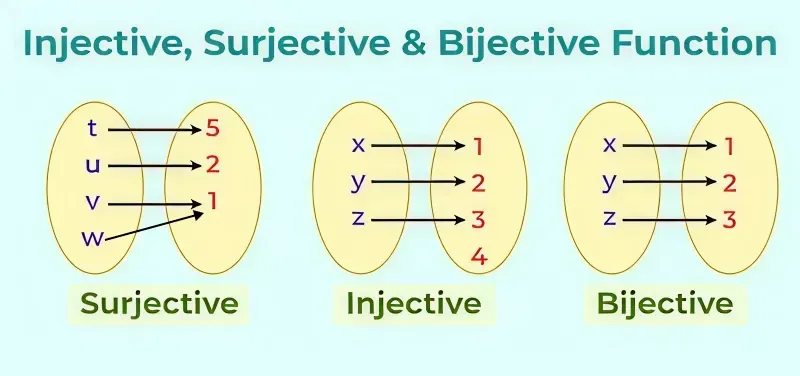
? Today I'm going to extend its functionality. When using the macro in real life I felt the need to display injective and surjective maps. And I needed both a function and a map macro. The first only mentions the name, domain and codomain while the latter displays how elements are mapped. I'll solve both issues (not that the second is an issue though).
What I wanted is an optional parameter, indicating whether a map is injective or surjective. The easiest but maybe semantically speaking not the cleanest one is just specifying the kind of arrow through the optional parameter. I've opted for this approach, TeX isn't a semantic mark-up language, but in my solution the non-semantic approach happens nicely. First a word on how TeX handles optional parameter. It handles them in an awful way. It basically boils down to saying "hey, there is an extra parameter" and specifying a default value for it. Now either the optional parameter or the default is assigned to the first variable. That's all there is.
The optional parameter will be either
twohead
or
hook
, indicating surjective respectively injective. The macro
now expands to the correct
\rightarrow
: either
\twoheadrightarrow
or
\hookrightarrow
. We've defined a command that takes one parameter, the default value is empty and it expands to the control sequence corresponding to the desired command. Notice how you only have to specify the optional prefix to
rightarrow
,
\csname \endcsname
is macro expansion at its best.
Notice that in display style, the
long
versions of arrows are used. But there is no
\longtwoheadrightarrow
nor
\longhookrightarrow
!
Let's make them then
:
The command
\ensuremath
typesets its parameter in mathematical mode,
\lhook
is (obviously) the left hook,
\joinrel
eliminates horizontal spacing between symbols, putting them directly next to eachother and
\relbar
is a horizontal line used to create new mathematical symbols.
Also note that I've used
\newcommand*
, the starred version of
\newcommand
. This macro assumes you won't be feeding it multiple paragraphs, as is the case here. Now when you
do
feed the
troll
macro multiple paragraphs, probably due some syntax error, it will complain at a more obvious place: namely exactly where it notices it has to consume too much and not at the end of the file.